
Ivermectin and Fenbendazole: Treating Turbo Cancer – Dr William Makis
Introduction
Interest in ivermectin and fenbendazole for cancer has increased because researchers have investigated these compounds in laboratory studies, animal models, reviews, and some early clinical research.
The available research covers several cancer types and examines different biological mechanisms. However, it is important to distinguish preclinical research, clinical research, and individual treatment claims.
Ivermectin and fenbendazole for cancer are not established substitutes for standard cancer treatment. Much of the evidence discussed in this article remains experimental or preclinical.
This article reviews research and claims surrounding ivermectin and fenbendazole for cancer, including ivermectin cancer research, fenbendazole cancer research, proposed mechanisms, and important safety considerations.
Medical Disclaimer: This article is for general informational purposes only. It does not recommend ivermectin, fenbendazole, or any experimental cancer protocol. Do not start, stop, or change cancer treatment without speaking with a qualified healthcare professional.
Ivermectin Resources
Interest in ivermectin and fenbendazole for cancer has led to increased discussion of proposed cancer protocols and research.
The source material discusses several ivermectin protocols and includes dosage comparisons and individual case reports. These claims should be understood as information reported by the source and not as established medical recommendations.
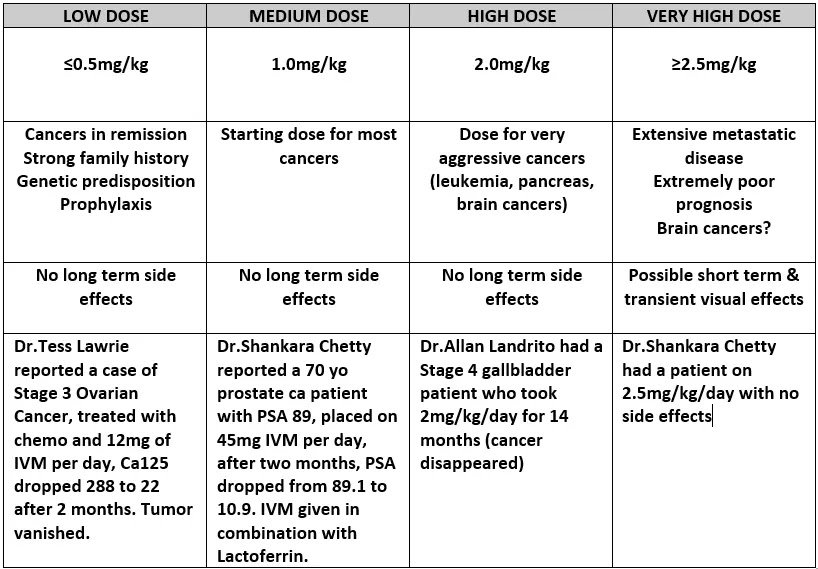
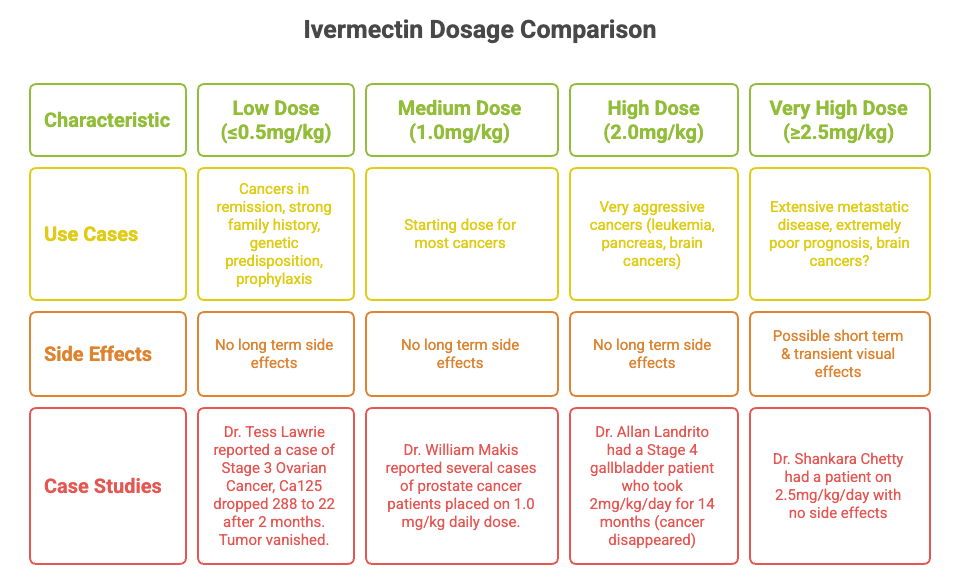
Caption: Source-reported ivermectin dosage comparison. The information shown reflects claims and case reports discussed in the source material and should not be interpreted as medical dosing guidance.
The source also references research and articles discussing ivermectin and cancer, including studies published in 2024 and 2025.
2025 Studies on Ivermectin for Cancer
Research involving ivermectin and fenbendazole for cancer continues to develop.
The source discusses a phase I/II study investigating ivermectin in combination with balstilimab in patients with metastatic triple-negative breast cancer, as well as reviews examining the potential repurposing of ivermectin in cancer research.
Another study referenced in the source investigated ivermectin combined with recombinant methioninase in pancreatic cancer cells.
These studies are important research references, but the existence of a study does not establish ivermectin as a proven cancer treatment.
2024 Studies on Ivermectin and Cancer
Research discussed in the source includes studies involving bladder cancer, lung adenocarcinoma, glioma, multiple myeloma, and other cancer models.
Some of these studies investigated cellular mechanisms such as oxidative stress, autophagy, signaling pathways, and effects on cancer cells.
The evidence varies considerably by study type. Laboratory and animal findings should not automatically be interpreted as evidence of effectiveness in humans.
Ivermectin and Cancer Research
The topic of ivermectin and fenbendazole for cancer includes research involving several cancer types.
Studies referenced in the source include research involving:
- Bladder cancer
- Lung cancer
- Glioma
- Multiple myeloma
- Ovarian cancer
- Prostate cancer
- Colon cancer
- Pancreatic cancer
- Melanoma
- Cervical cancer
- Hepatocellular carcinoma
- Osteosarcoma
- Gastric cancer
- Leukemia
- Esophageal cancer
- Glioblastoma
These studies represent different types of research and should not be interpreted as proof that ivermectin can treat every cancer type.
Ivermectin Anti-Cancer Mechanisms of Action
Researchers have investigated several possible mechanisms through which ivermectin may affect cancer-related biological processes.
The source discusses pathways including Akt, Wnt, and mTOR, as well as possible effects involving cancer stem cells.
However, proposed mechanisms are not the same as demonstrated clinical effectiveness.
For readers researching ivermectin and fenbendazole for cancer, understanding this distinction is important: a biological mechanism observed in laboratory research does not automatically translate into a successful treatment for patients.
Ivermectin and Fenbendazole for Cancer: What Does the Evidence Show?
Current evidence concerning ivermectin and fenbendazole for cancer includes preclinical research, experimental studies, reviews, and individual claims.
Preclinical research can help researchers identify potential mechanisms and determine whether a compound deserves further investigation.
Clinical research is necessary to establish whether a treatment is effective and safe for patients.
Therefore, the available evidence should be interpreted cautiously rather than treating experimental findings as established cancer therapy.
Fenbendazole and Cancer Research
Fenbendazole has also attracted interest in discussions about ivermectin and fenbendazole for cancer.
The source discusses fenbendazole research and related compounds in the benzimidazole family, including mebendazole and albendazole.
Research referenced in the source includes laboratory and animal studies investigating compounds in this family in different cancer models.
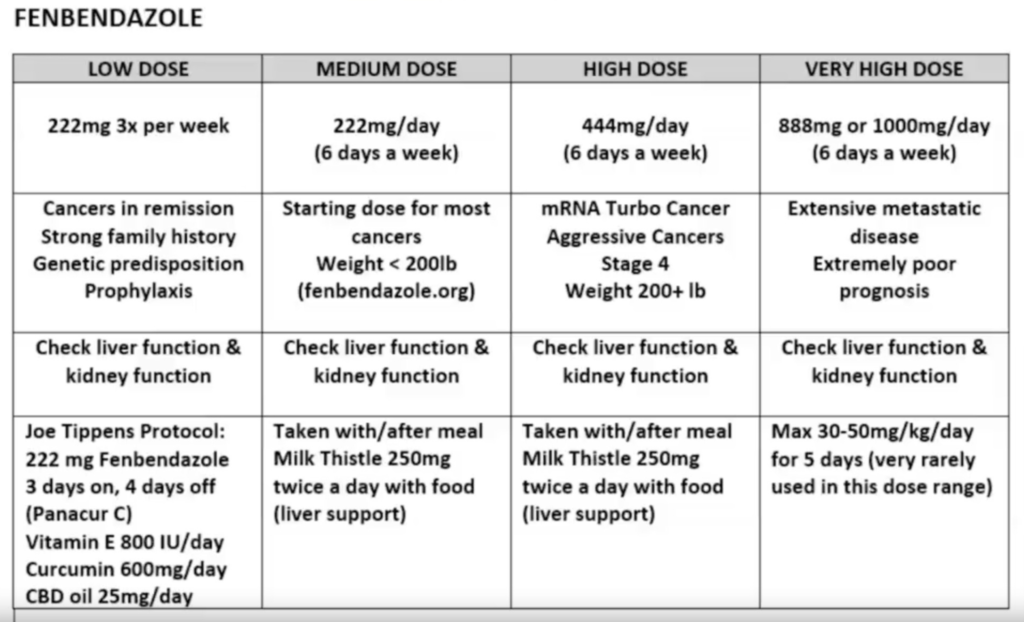
Caption: Source-reported fenbendazole dosage comparison. The image describes experimental or reported protocols from the source material and is not medical dosing advice.
The distinction between research findings and approved cancer treatment is especially important when discussing fenbendazole.
New Studies on Fenbendazole and Related Compounds
The source discusses several studies published between 2023 and 2024 involving fenbendazole, mebendazole, and related compounds.
Research areas mentioned include:
- Triple-negative breast cancer
- Colon cancer
- Lung cancer
- Glioblastoma
- Lymphoma
- Acute myeloid leukemia
- Pediatric glioma
Some studies use cell or animal models. These models can provide useful information for future research but cannot by themselves establish effectiveness in human cancer patients.
Ivermectin, Fenbendazole and the Benzimidazole Family
Fenbendazole and mebendazole belong to the broader benzimidazole family.
Research has investigated several compounds in this family for potential anticancer effects.
However, different medicines have different approved uses, safety profiles, pharmacology, and regulatory status.
For this reason, information about one compound should not automatically be applied to another.
Ivermectin and Mebendazole
The source also discusses combinations involving ivermectin and mebendazole.
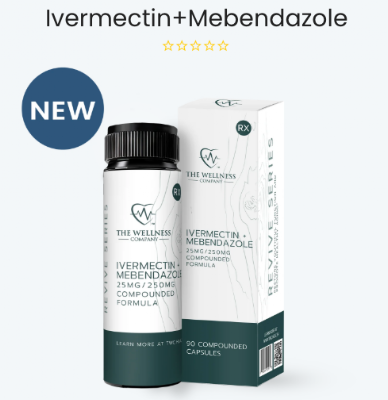
Caption: Example of an ivermectin and mebendazole product referenced in the source material. This image is provided for informational context and does not establish that the product is an effective cancer treatment.
When discussing ivermectin and fenbendazole for cancer, readers should distinguish product information from clinical evidence.You can also read our related article about Mebendazole Cancer Research for additional information about research involving mebendazole.
A product being commercially available does not mean that it has been proven effective for cancer.
Ivermectin Access and Medical Policy
The source includes a separate discussion about ivermectin access and medical policy.

Caption: Image related to the source’s discussion of ivermectin access and medical policy.
Regulations surrounding prescription medicines vary between countries and jurisdictions. Patients should follow applicable medical and regulatory guidance in their location.
Safety Considerations for Ivermectin and Fenbendazole for Cancer
Safety is an important consideration when researching ivermectin and fenbendazole for cancer.
Cancer patients may already be receiving chemotherapy, radiation therapy, immunotherapy, targeted therapy, or other medicines. For additional information about ivermectin uses and safety considerations, read our Ivermectin Tablets USP 40mg guide.
The source also discusses safety and monitoring considerations related to experimental fenbendazole protocols.
Patients should not attempt experimental cancer protocols based solely on information found online.
A qualified healthcare professional can review a patient’s existing cancer treatment, medications, medical history, and potential risks.
Why Preclinical Research Matters
Much of the discussion around ivermectin and fenbendazole for cancer comes from preclinical research.
Preclinical research may involve:
- Cancer cells grown in laboratories
- Animal models
- Molecular studies
- Mechanistic research
- Computer-based analyses
These studies can help researchers identify potential treatment strategies.
However, promising laboratory results do not guarantee that a treatment will be effective or safe in humans.
Frequently Asked Questions
Is ivermectin and fenbendazole for cancer proven?
No. Ivermectin and fenbendazole for cancer remain an area of research. Available evidence includes preclinical studies, reviews, and other research, but this does not establish the combination as a proven cancer treatment.
What does ivermectin cancer research investigate?
Ivermectin cancer research has investigated different biological mechanisms and cancer models, including studies involving bladder, lung, glioma, breast, colon, pancreatic, and other cancers.
What does fenbendazole cancer research investigate?
Fenbendazole cancer research has investigated possible effects in laboratory and animal models, along with research involving related benzimidazole compounds.
Can ivermectin and fenbendazole replace cancer treatment?
No. Ivermectin and fenbendazole for cancer should not be used as replacements for established cancer treatment.
Why are researchers interested in ivermectin and fenbendazole?
Researchers have investigated potential biological effects and drug-repurposing possibilities. However, further clinical research is needed to determine whether experimental findings translate into meaningful benefits for patients.
Conclusion
Research surrounding ivermectin and fenbendazole for cancer continues to receive attention.
The available literature includes laboratory research, animal studies, reviews, and emerging clinical investigations. These studies may help researchers understand potential mechanisms and identify areas for future investigation.
At the same time, experimental findings should not be confused with proven cancer treatments.
Anyone researching ivermectin and fenbendazole for cancer should review reliable scientific evidence and discuss treatment decisions with a qualified healthcare professional.
Medical Disclaimer: This article is for informational purposes only and is not medical advice. It does not diagnose, treat, cure, or prevent any disease. Do not start, stop, or modify medication or cancer treatment without consulting a qualified healthcare professional.



I don’t think the title of your article matches the content lol. Just kidding, mainly because I had some doubts after reading the article.